AdobeStock_247530817-1


Encoder Applications by Function

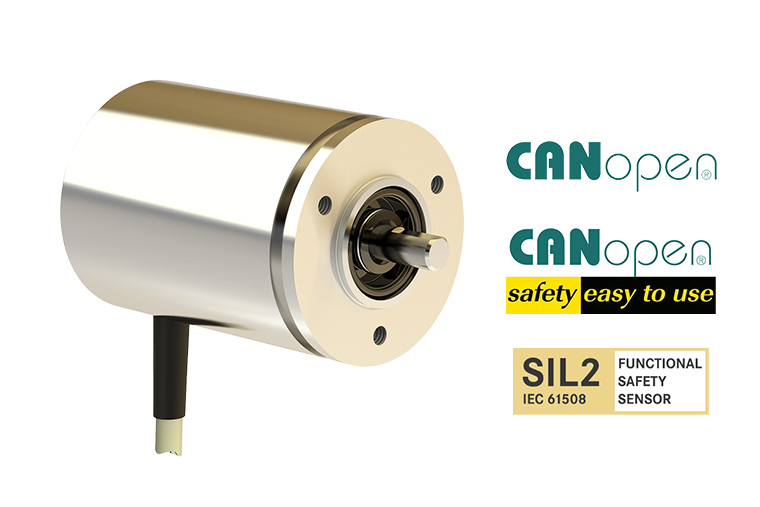
Safety Encoders for Functional & Operational Safety

Safety-rated encoders for functional safety and harsh conditions


Designing for functional safety means every component has to pull its weight. That includes your encoders.

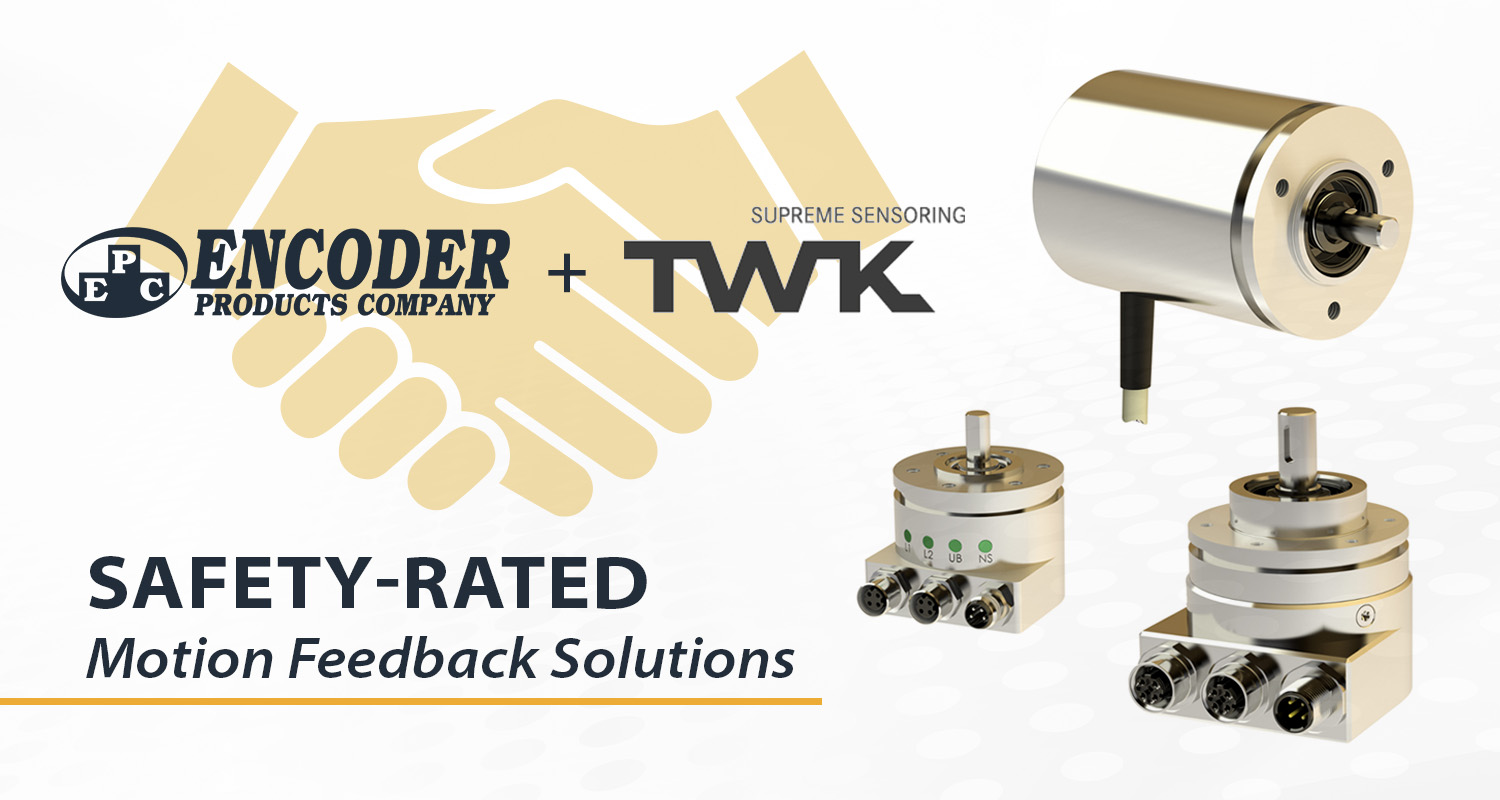
Through the partnership between Encoder Products Company (EPC) and TWK, you get access to a complete portfolio of SIL-rated encoders and safety sensors—backed by decades of design experience, in-house manufacturing, and application-level support.

Whether you’re building collaborative robots, AGVs/AMRs, mobile equipment, or industrial automation, we can help you meet your safety requirements without compromising performance or footprint.


How We Work With You


Designing with safety encoders can feel complex. We make it easier by:

  • Helping you select the right SIL level, interface, and form factor

  • Providing application engineering support from EPC in North America, backed by TWK’s safety expertise in Germany

  • Offering both catalog and customer-specific variants when your design demands something unique

  • Supporting fast prototyping and consistent long-term supply

Ready to talk safety encoders?

Share a bit about your project, required safety level, and mechanical constraints, and our team will recommend options from the EPC + TWK portfolio—along with samples or data sheets where needed.

Examples of motion feedback for safety applications:

  • Collaborative & industrial robots

  • AGVs and AMRs

  • Mobile machinery and utility vehicles

  • Cranes, lifts, and hoists

  • Packaging and material handling systems

  • Safety-related motion control and position monitoring

Frequently Asked Questions

  • What is an encoder used for operational safety?

    An encoder used for operational safety provides reliable motion feedback—such as position, speed, or direction—to help machines operate within defined limits. While not always classified as a functional safety device, operational safety encoders support safer machine operation by enabling accurate monitoring, control, and fault detection.

  • What’s the difference between operational safety and functional safety?

    Operational safety focuses on preventing unsafe conditions during normal operation by ensuring accurate, dependable feedback.

     Functional safety involves certified safety functions designed to reduce risk in the event of a fault (typically meeting Safety Integrity Level (SIL) or Performance Level (PL) requirements).

     Operational safety encoders are often used alongside functional safety systems to improve overall machine safety and reliability.

  • Why is encoder reliability critical for operational safety?

    Encoders play a key role in:

    • Speed monitoring
    • Position verification
    • Overspeed detection
    • Direction sensing 

    If an encoder provides incorrect or inconsistent data, machines may operate outside safe parameters. High-quality encoders reduce risk by offering repeatable accuracy, robust signal integrity, and dependable performance over time.

  • What features should I look for in an encoder used for operational safety?

    Key features include:

    • High resolution and accuracy for precise control
    • Redundant outputs for verification or fault detection
    • Robust environmental protection (IP66, IP67, IP69K)
    • Non-contact sensing technology to minimize wear
    • Stable electrical output resistant to noise and vibration
  • Are absolute or incremental encoders better for operational safety?

    Both can be used, depending on the application:

    Absolute encoders can retain position data after power loss, reducing unexpected motion on startup.

     Incremental encoders provide high-speed feedback and are well-suited for continuous motion monitoring.

    In safety-conscious applications, absolute encoders are often preferred because they eliminate homing routines that could introduce risk.

  • How do communication protocols impact operational safety?

    Modern communication protocols improve reliability and diagnostics:

    CANopen / CANopen Safety – Ideal for high-vibration and mobile equipment

    EtherCAT / FSoE – High-speed, deterministic control

    PROFIBUS / PROFINET / PROFIsafe – Common in factory automation

    Analog or digital outputs – Simple, proven, and widely supported

    Choosing the right protocol ensures fast, accurate, and predictable data transmission.

  • Can operational safety encoders be used in harsh environments?

    Yes. Encoders designed for operational safety are often built for:

    • Extreme temperatures
    • Shock and vibration
    • Washdown or outdoor exposure
    • Dust, debris, and moisture

    Look for encoders with sealed housings, rugged bearings, and industrial-grade connectors.

  • How do encoders help prevent unsafe machine behavior?

    Encoders help systems:

    • Detect overspeed or stalled conditions
    • Verify correct positioning before motion
    • Monitor direction changes
    • Identify abnormal operation early
    • This allows control systems to respond before conditions become hazardous. 
  • Do operational safety encoders require certification?

    Operational safety encoders do not always require SIL or PL certification, but they must meet the performance and reliability expectations of the application. In many systems, they are used in conjunction with certified safety components.

  • When should I consider upgrading to a safety-rated encoder?

    You should consider a safety-rated encoder when:

    • Regulations require certified safety functions
    • Risk assessments indicate higher hazard levels
    • Redundancy and diagnostic coverage are mandated
    • Operational safety encoders are often a cost-effective first step or a complementary solution.
  • Can encoders be customized for safety-focused applications?

    Yes. Encoder Products Company offers:

    • Custom resolutions
    • Redundant or dual outputs
    • Specialized housings or shafts
    • Application-specific mounting options

    Customization ensures the encoder fits seamlessly into your safety strategy without over-engineering.

  • How do encoders support predictive maintenance and uptime?

    Encoders with stable performance and diagnostic capabilities help detect:

    • Mechanical wear
    • Misalignment
    • Signal degradation

    This allows teams to address issues before they impact safety or productivity. 

  • Who should I talk to if I’m unsure which encoder fits my safety needs?

    Application engineers and technical specialists can help evaluate:

    • Environmental conditions
    • Risk levels
    • Control architecture
    • Budget and lifecycle expectations

    The right encoder balances safety, performance, and practicality. 


More Resources


Talk with an Expert

We're here to help. Our engineers and encoder experts will respond quickly to your toughest, most technical encoder questions.

Expedite options are available on many models. Contact us for details.

For specific needs or requests: