Product Demo

How Draw Wire Encoders Work and When to Use Them

Draw wire encoders provide a reliable, practical solution for measuring linear position and distance in industrial motion control applications. From automated equipment and material handling systems to mobile machinery and lifting equipment, draw wire technology delivers accurate position feedback across a wide range of motion.

Watch our demonstration to learn how draw wire encoders work, when to use them, and how they compare to other linear measurement solutions.

What is a Draw Wire Encoder?

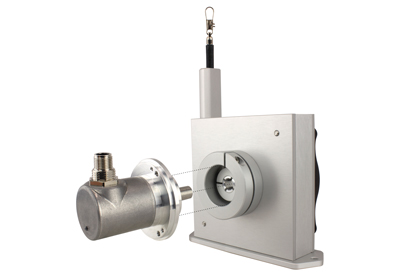
A draw wire encoder is a linear measurement device that converts the movement of a retractable cable into position feedback.

As equipment moves, a flexible wire extends or retracts from a spring loaded drum. The drum rotates an encoder, which converts that movement into an electrical signal used to determine linear position or displacement.

Draw wire encoders are especially useful when direct linear measurement is needed but space, distance or equipment design makes other measurement methods impractical.

Explore EPC's Draw Wire Encoder Solutions

EPC offers a range of draw wire solutions for industrial linear position measurement, including the expanding analog encoders and the established LCX Series.

With multiple housing sizes, measuring ranges and feedback configurations available across the product line, engineers can select a solution suited to their applications travel distance, space constraints and control requirements.

Talk With an Encoder Expert

Find the Right Linear Measurement Solution

Not sure whether a draw wire encoder is the right choice for your application? EPC's engineering and technical support teams can help you evaluate your measurement requirements and identify the appropriate solution.

Talk With an Encoder Expert


More Resources